
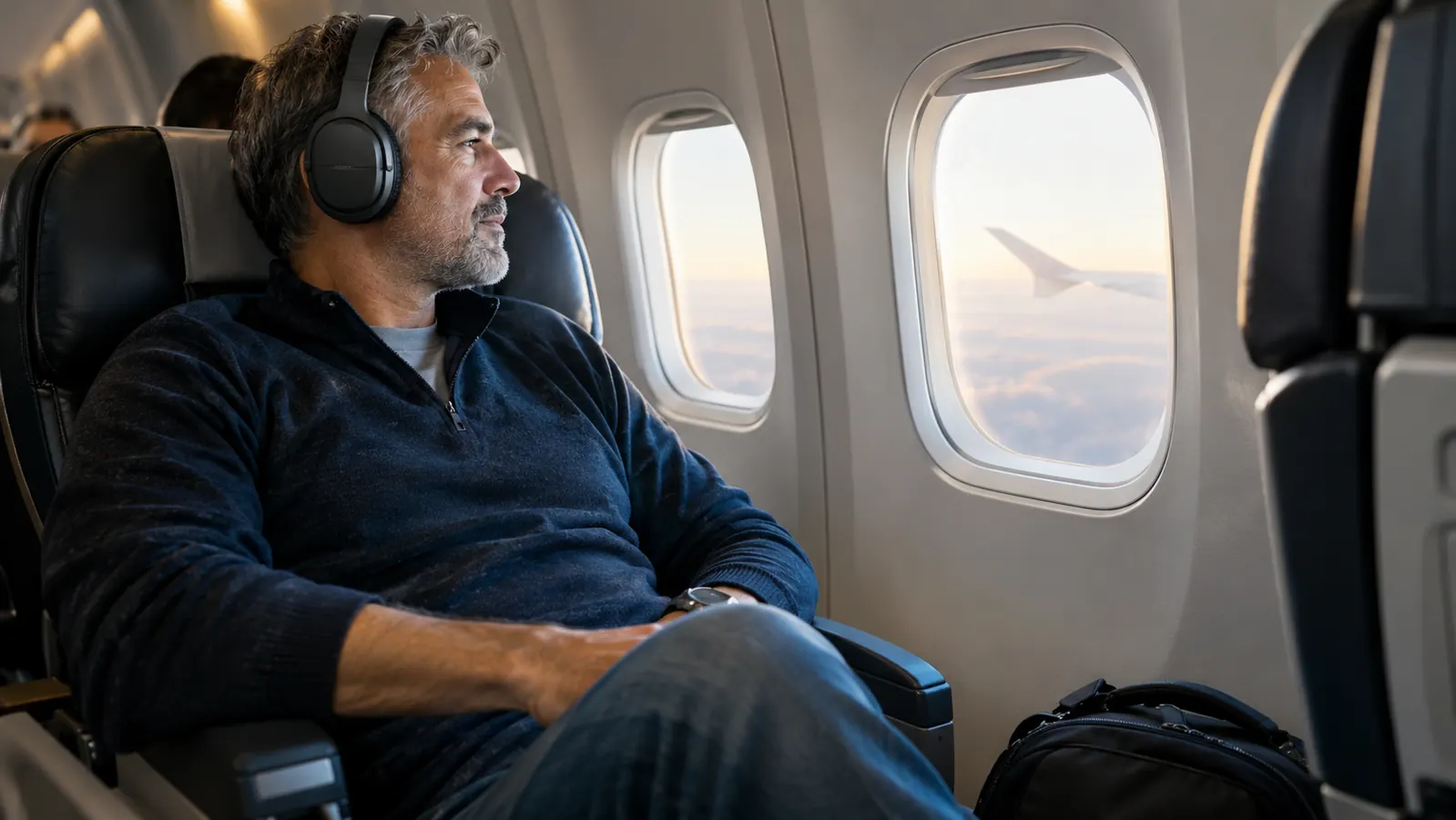
If you are trying to decide between the Bose QuietComfort Headphones and the Sony WH-1000XM5, you are probably packing for a trip and want to get this right the first time. I have spent 30 years behind mixing boards, and these days I fly to Oahu a few times a year to see family. I took both pairs on the last trip, wore them through security, on the plane, in a rental car, and on a beach walk, and I came home with a clear answer.
The short version: the Bose QuietComfort Headphones are the pair I would pack. They are more comfortable for long stretches, their noise cancelling is steadier in the weird low-frequency hum of an airplane cabin, and they fold flat into my one carry-on backpack. The Sony WH-1000XM5 sound slightly more detailed and their battery lasts longer, but they do not fold, their touch controls are fiddly when you are half asleep, and their noise cancelling can pump slightly on a bumpy descent. Both are excellent. They are not the same tool.
| Bose QuietComfort Headphones | Sony WH-1000XM5 | |
|---|---|---|
| Comfort for long flights | Plush, low-clamp fit that disappears after an hour | Slightly firmer clamp and a shallower earcup |
| Noise cancelling on a plane | Steady, natural reduction of cabin roar | Slightly deeper but can pump on pressure changes |
| Sound quality | Warm, honest, easy to listen to for hours | More detail and a wider soundstage |
| Battery life | 24 hours with noise cancelling on | 30 hours with noise cancelling on |
| Packing | Folds flat into a carry-on backpack | Does not fold, needs a hard case |
| Controls | Physical buttons you can find by touch | Touch panel that is easy to trigger by accident |
| Best for | Travelers who live on planes and pack light | Commuters and listeners who want maximum detail |
I tested both pairs the way most travelers will actually use them: on real flights, in airport lounges, in the passenger seat on long drives, and on the lanai at night with the ocean in the background. I wore the Bose QuietComfort Headphones on one leg of a trip to Oahu and the Sony WH-1000XM5 on the way home, then swapped again on the next trip so the plane, the seat and the cabin noise would not favor one pair.
Both are excellent headphones, so this comparison comes down to the details that matter when you are living out of a carry-on bag: how they fold, how they feel after hours, how the noise cancelling handles a jet engine, and how much fuss each one takes to use.
Where Bose Wins
The Bose QuietComfort Headphones win on the things that matter most when you are actually traveling. The earcups are deep and the clamp is gentle, so I wore them for the full five hour flight to Honolulu without needing a break. My wife Lani tried them for an hour in the terminal and said the same thing. The Sony pair started to feel tight around my ears after about two hours, and that is the difference between a pair you forget you are wearing and a pair you are aware of the whole flight.
Bose also wins on noise cancelling in the specific environment of an airplane. The Sony WH-1000XM5 cancels a little more total sound in a quiet room, but on a plane the Bose pair feels steadier. It knocks down the low rumble of the engines without that slight pressure pumping you get from the Sony pair when the cabin pressure changes on descent. For me, steady beats slightly deeper every time. And the Bose buttons are physical, so I can find the volume control without looking, which matters when you are half asleep at 35,000 feet.
Pack the pair that disappears on your head
The Bose QuietComfort Headphones fold flat, cancel the cabin roar, and stay comfortable from gate to baggage claim. Check today's price on Amazon and see why they are the pair I reach for first.
Amazon Check Today's Price on Amazon →The fold is the first big difference. The Bose QuietComfort Headphones fold inward into a compact shape and drop into a fairly slim case. The Sony WH-1000XM5 only swivels flat, it does not fold, so its case is wider. In my carry-on backpack that difference was real. With the Bose I could still fit a sweater and my charger in the same pocket. With the Sony I had to rearrange things every time.
Comfort over a long flight also went to Bose for me. The clamp is gentle and the pads are soft and deep, so after five hours I did not have that pressure ache at the jaw. The Sony is also comfortable, and lighter on the head, but the pads sat a little closer to my ears and I took it off more often to let them breathe.
On the low rumble of an airplane cabin, the Bose noise cancelling felt slightly stronger to my ears. The engine drone simply fell away. The Sony did very well too, and the gap is small, but on a long overnight flight small differences add up, and I arrived feeling a little less worn out with the Bose on.
Physical buttons are another quiet win. The Bose uses real buttons I can find by feel in a dark cabin. The Sony relies more on touch gestures on the ear cup, which work well most of the time, but I triggered them by accident a few times while adjusting the fit or pulling my hood up.
The wired connection worked on both pairs, but the Bose cable felt sturdier and the jack sat more securely, which matters when you are plugged into an armrest jack that is already loose from years of passengers.
Multipoint pairing, connecting to a phone and a laptop at once, worked smoothly on both. On the Bose it felt slightly more reliable switching back and forth, while the Sony occasionally held on to the laptop when I wanted the phone. A small thing, but on a busy travel day small things add up.
I also tried both on a long road trip in the passenger seat of the 4Runner, where the noise is tire roar instead of engine drone. Here the two felt closer than on the plane. Both cut the road noise to a soft hush, and I could listen to an audiobook at low volume for hours without fatigue.
Where Sony Wins
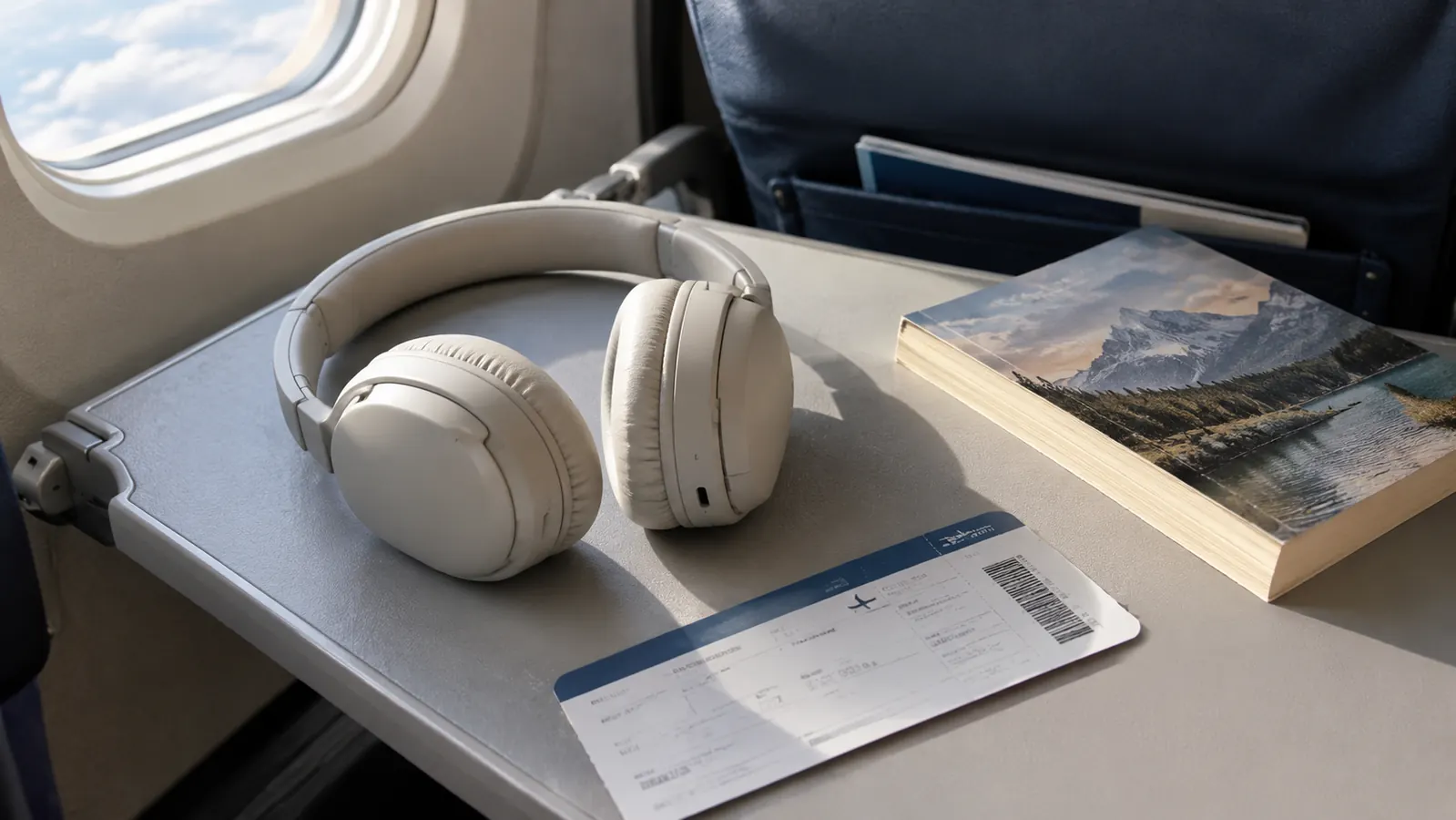
I am not going to pretend the Sony WH-1000XM5 does not have real strengths. They sound more detailed. Acoustic guitar strings have a little more sparkle, and the soundstage is wider, so a live album feels more like a room and less like a pair of headphones. If you are the kind of listener who sits still and picks apart a mix, the Sony pair is the more enjoyable instrument. The battery also goes longer, 30 hours versus 24, which matters if you forget to charge before a long travel day.
The Sony pair also cancels a bit more noise in steady, low-frequency environments like a hotel room with an air conditioner or a train. In those situations the extra depth is real. But the touch controls drove me a little crazy. I bumped the right earcup reaching for my seatbelt and paused my music twice. And because the Sony pair does not fold, it takes up a big chunk of my one carry-on backpack. If you pack a suitcase and carry a separate bag, that is less of an issue. If you pack like me, it is a real one.
Battery life is the clearest Sony advantage. The Sony WH-1000XM5 is rated for more listening time than the Bose, and in my use it lasted noticeably longer between charges. If you take very long trips with long layovers and rarely see an outlet, that extra margin is reassuring.
The Sony app also gives you more to play with: a detailed equalizer, automatic switching of noise cancelling based on where you are, and features that pause your music when you start talking. Some people love those features. I found a few of them more trouble than they were worth, but if you like to fine tune, the Sony gives you more knobs to turn.
Sound quality is close, with a slightly different flavor. To my ears, which spent years behind a mixing desk, the Sony sounded a little more detailed in the high end, while the Bose sounded warmer and easier on long sessions. Neither is wrong. Both sound very good after a quick EQ adjustment in their apps.
Call quality also went slightly to the Sony in my testing. On a windy beach walk in Kailua, my wife Lani said my voice sounded clearer on the Sony than on the Bose. If you take a lot of calls on the move, that is worth weighing.
The Sony also folds its features into a lighter frame. On the scale it came in a little lighter than the Bose, and on a short flight you may well prefer that. For someone who wears headphones on a daily commute as well as on trips, that lighter weight could easily tip the balance.
Charging speed was strong on both, and both use USB-C, so either one shares a cable with the rest of your gear. A few minutes plugged in at the gate adds hours of listening on either pair, so a forgotten overnight charge is not a disaster with either one.
Who Should Buy Which
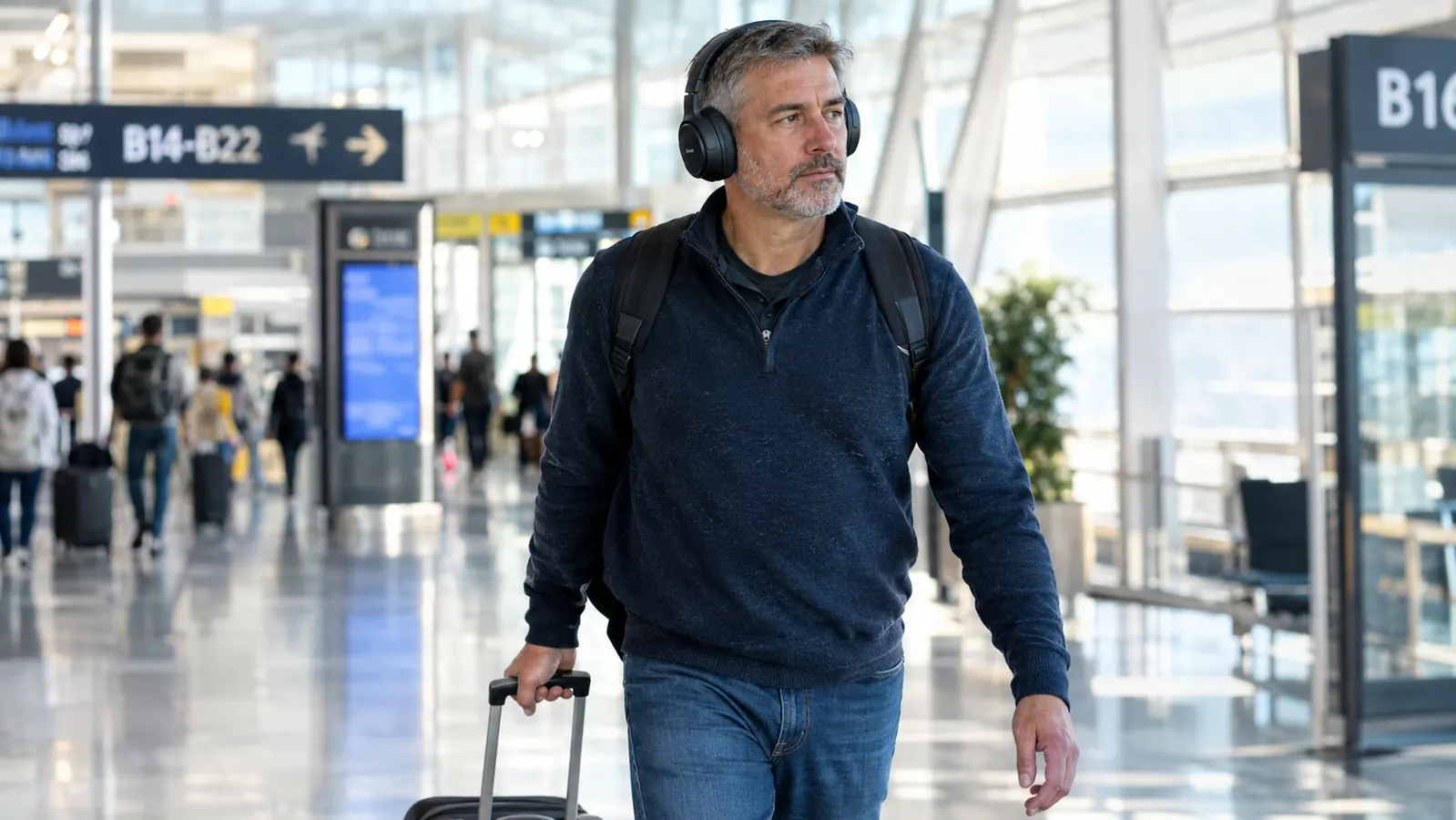
Buy the Bose QuietComfort Headphones if you fly often, pack light, and want a pair you can wear for five hours without thinking about them. They are the better travel companion: they fold flat, the buttons are foolproof, and the noise cancelling is tuned for the specific chaos of an airplane cabin. They are also the safer gift for someone who is not a headphone obsessive, because the fit is forgiving and the controls are obvious.
Buy the Sony WH-1000XM5 if you are a commuter or a home listener who wants maximum detail and the longest battery life, and you do not mind carrying a hard case. They are the better pure listening instrument. But for my money, the pair that disappears on your head and folds into your bag is the pair you will actually use on every trip. That is the Bose QuietComfort Headphones, and they are the ones I pack.
Your next flight starts with the right pair
The Bose QuietComfort Headphones are the pair I trust from San Luis Obispo to Honolulu. Check today's price on Amazon and pack the headphones that fold flat, stay comfortable, and keep the cabin quiet.
Amazon Check Today's Price on Amazon →My own choice, after many hours with both on the same routes, is the Bose for travel and the Sony for anyone who values battery life and app features above packing size. Lani borrowed both on our last trip and reached for the Bose every time, mostly because it folded smaller and felt gentler after hours. Either pair will make a long flight far more pleasant than the earbuds most people board with.
Whichever you choose, try them on before a big trip and give your ears a few days to adjust. Both pairs felt slightly tight the first week and settled in after that, and a long flight is the wrong place to find out a fit does not suit you.
And keep the cable in the case. On two of my flights the seatback screens only accepted a wired connection, and both pairs saved those movies for me because I had packed it.