
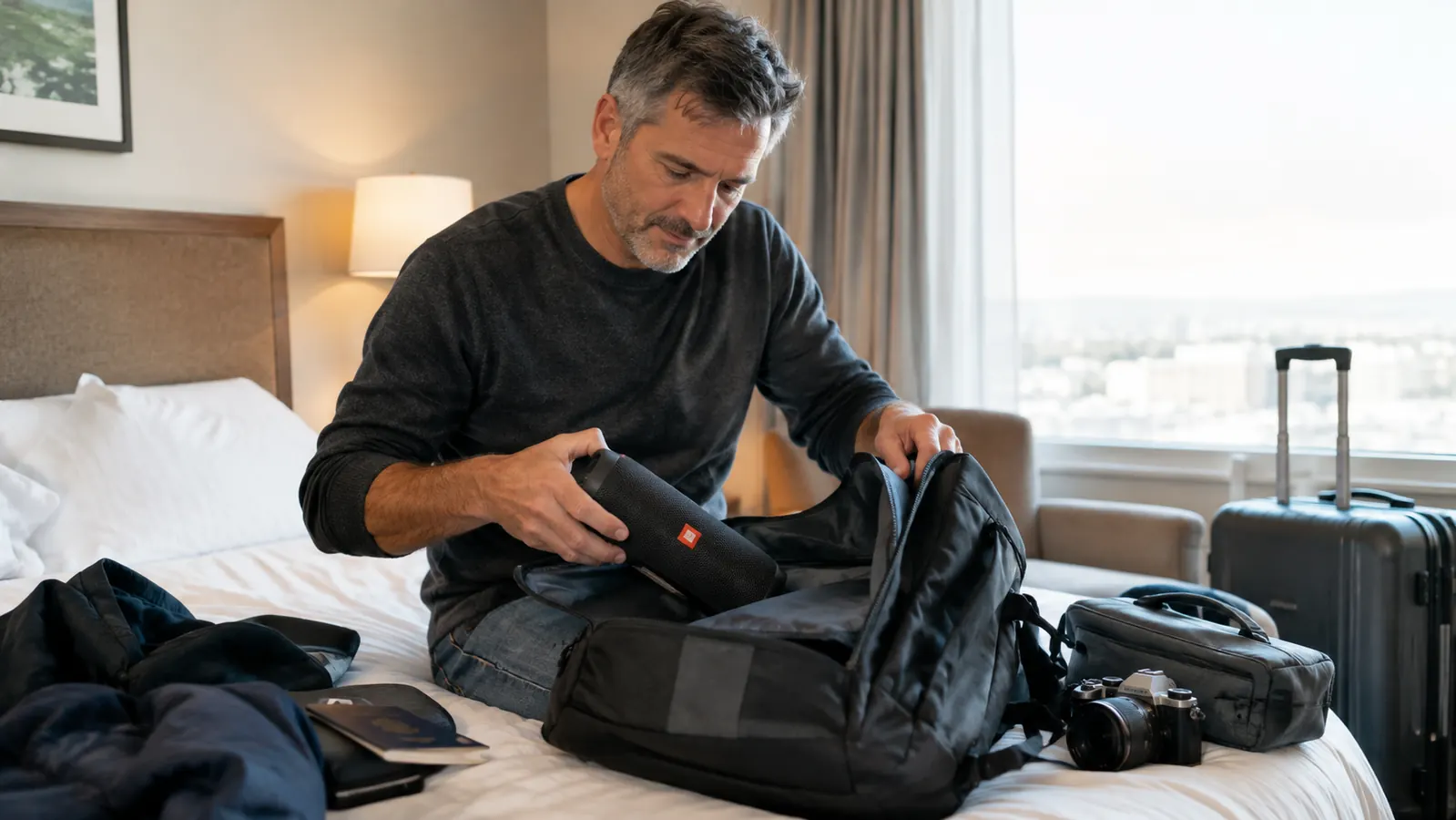
If you are trying to decide between the JBL Flip 6 and the JBL Charge, you are probably doing the same thing I did: holding one in each hand in the aisle of an electronics store, trying to figure out if the extra size is worth it. I am Wes, a retired live-sound tech, and I travel with one carry-on backpack. I have taken both speakers through airports, hotel rooms, rental cars and beach campsites on the way to see family on Oahu. The short answer: the JBL Flip 6 is the better travel speaker for most people, and the JBL Charge wins only if you need a power bank and a bigger soundstage.
I have mixed live sound for enough years to be picky about what I listen to, but I am not a snob about it. A speaker that lives in a backpack has to earn its space. Here is how the two JBL speakers compare after real use, not spec sheets.
| JBL Flip 6 | JBL Charge | |
|---|---|---|
| Size and weight | About 7 inches long, 1.1 pounds, fits in a backpack side pocket | About 8.7 inches long, 2.1 pounds, noticeably heavier in a bag |
| Battery life | Up to 12 hours at moderate volume | Up to 20 hours, plus it can charge your phone |
| Sound | Clear, balanced, plenty for a hotel room or campsite | Bigger low end and more volume for an open beach |
| Water resistance | IP67, dustproof and dunkable | IP67, same rating |
| Best for | Carry-on travel, everyday listening, small spaces | Long trips, phone charging, louder outdoor hangs |
I have owned both of these speakers, and I have carried both on the same trips: flights to Oahu, road trips up the California coast in the 4Runner, beach days and campsite evenings. The JBL Flip 6 and the JBL Charge come from the same company, share the same rugged design, and sound related. The real question is not which one sounds better in a store. It is which one earns its space in your bag when you travel.
So I judged them on the things that matter on the road: size and weight in a carry-on, how loud each one gets outdoors, how long the battery lasts, and the small features that either help or get in the way.
Where the JBL Flip 6 Wins
The JBL Flip 6 wins the moment you pick up your bag. At about 1.1 pounds, it disappears into a carry-on. I pack everything for a week into one backpack, and the Flip 6 slides into the side pocket next to my water bottle. The JBL Charge, at more than twice the weight, takes up real estate and adds noticeable heft. When you are walking through an airport terminal, that difference is exactly the kind of thing you feel by gate 12.
The JBL Flip 6 also sounds more honest for its size. JBL tuned it with a racetrack-shaped driver and a separate tweeter, so vocals come through clearly. Acoustic guitar, which is most of what I play and listen to, sounds natural instead of mushy. In a hotel room or a small campsite, the Flip 6 fills the space without distortion. It is not a party speaker, but it was never trying to be one.
Pack the JBL Flip 6 and forget it is in your bag
The JBL Flip 6 is the speaker I reach for when I want something that sounds good and does not weigh me down. Check today's price on Amazon and see if it fits your travel kit.
Amazon Check Today's Price on Amazon →Size is the biggest win for the JBL Flip 6, and for travelers it is not a small one. The Flip slips into the water bottle pocket of my carry-on backpack. The Charge is noticeably longer, wider and heavier, roughly twice the weight, and it needs a real spot inside the bag. On a trip where every pound in the backpack counts, that difference decides it for me.
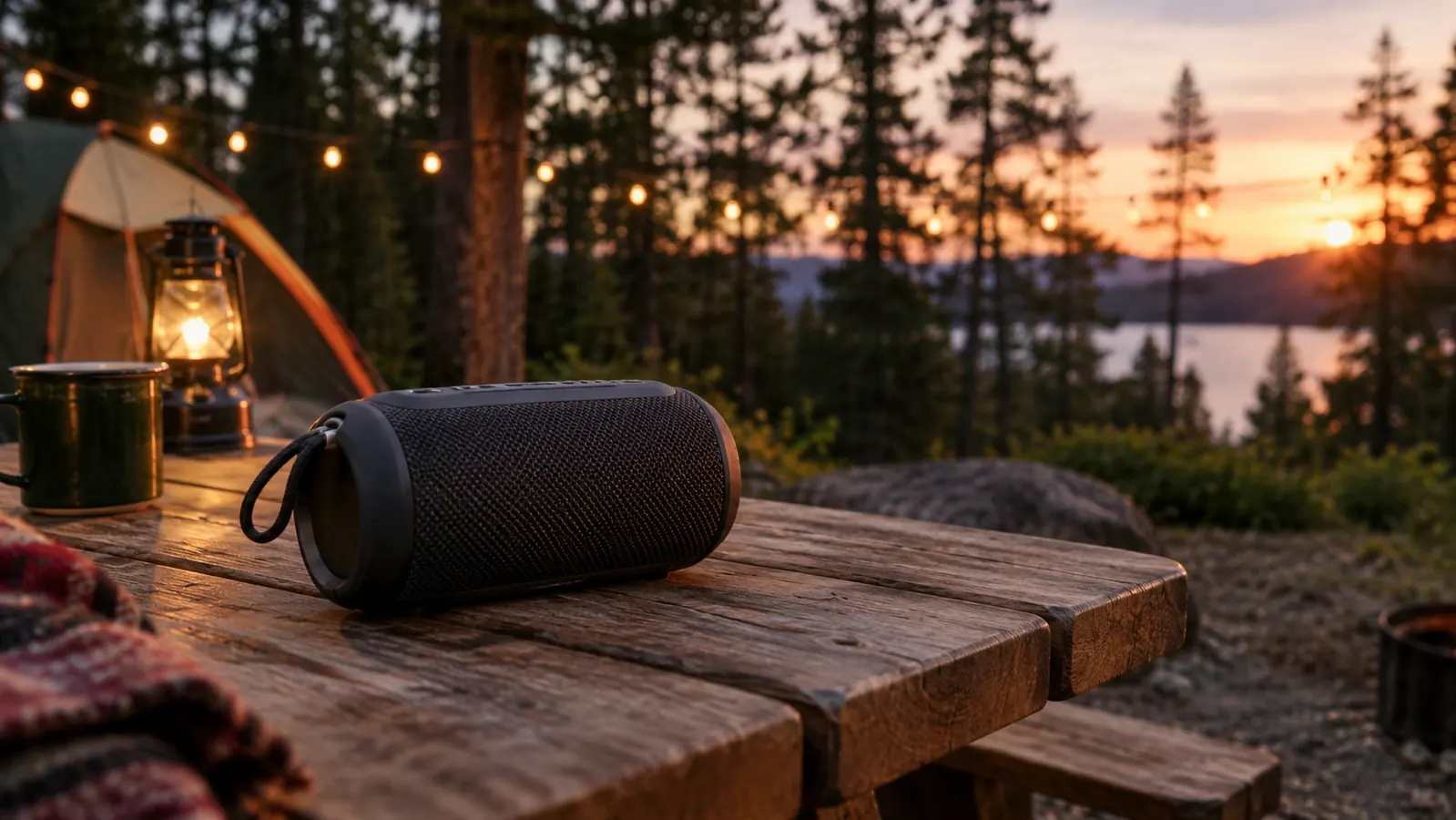
The Flip is also easier to place. It stands upright on a narrow hotel nightstand, hangs from a tent loop by its strap, and fits in a cup holder in the 4Runner. The Charge has no strap loop of the same kind and takes more surface, so in small spaces it is simply more awkward.
In a hotel room or a small tent, the Flip has all the volume you need. The Charge plays louder and with a bit more bass, but indoors that extra power mostly goes unused, and at night with neighbors on the other side of a thin wall I never turned either one up very far.
Price and value also lean toward the Flip. It costs less, and for one or two people listening on the road it delivers most of what the Charge does. For the kind of travel Lani and I do, quiet evenings and small gatherings, the extra money for the bigger speaker would mostly buy power we would not use.
Both speakers carry the same IP67 rating for dust and water, and both survived the same sandy beach days in my testing, so durability is a tie. That means the Flip gives up nothing in toughness for its smaller size, which is exactly what you want in a speaker that rides in a backpack.
Battery life on the Flip 6 has been fine for day trips. A full beach day with music playing at moderate volume still left some charge for the evening, and it charges over USB-C, the same cable as my phone. For travel with an outlet every night, it never ran out on me.
The JBL Portable app works with both speakers and lets you pair two together for stereo or link more for a bigger sound. If you already own one JBL speaker, a Flip 6 makes an easy second unit for a hotel room, and the pair sounds wider than either one alone.
On flights the Flip also avoids awkward questions at security. It is small enough that I leave it in the backpack pocket, and it has never been pulled for a second look. With the larger Charge in my bag, it went through the scanner separately twice, which slowed me down in a busy line at Honolulu.
Where the JBL Charge Wins
The JBL Charge wins on stamina and utility. Its battery lasts up to 20 hours, which is genuinely useful on a long travel day. More importantly, the Charge doubles as a power bank. I have charged my phone from it in a rental car and at a beach campsite when the outlet situation was hopeless. If you are the person who always needs to top off a phone, that alone can justify the extra weight.
The JBL Charge also has more low end and more headroom. On an open beach with waves and wind, the Flip 6 has to work hard, while the Charge pushes music out with less strain. If your travel means group hangs outdoors rather than quiet hotel evenings, the Charge is the better soundtrack. It is a tradeoff: you carry a heavier speaker, and in exchange you get a longer party.
The JBL Charge earns its name with its built-in power bank. A USB port on the back lets it charge your phone, and on a long camping weekend with no outlet, that is genuinely useful. The Flip cannot do that, so with it I pack a separate small battery for my phone.
Battery life is the other clear Charge advantage. It is rated for many more hours than the Flip, and in my use it lasted through a full weekend of evening listening without a recharge. The Flip needs charging every day or two with heavy use.
Sound also goes to the Charge if you have a bigger crowd. On an open beach with wind and waves, the larger driver and extra power push the music farther, and the bass holds up better at high volume. For a family gathering or a group of eight around a fire, the Charge is the better tool.
If you mostly travel by car and do not care much about bag space, those advantages become even stronger. In the back of the 4Runner, the extra weight costs nothing, and having a speaker that can also top up your phone at the campsite is a real convenience.
Charging the Charge itself takes longer, simply because the battery is bigger. After a weekend of use, a full recharge took most of an afternoon plugged in at the rental house. That is fine at home, less fine in a motel where you leave early.
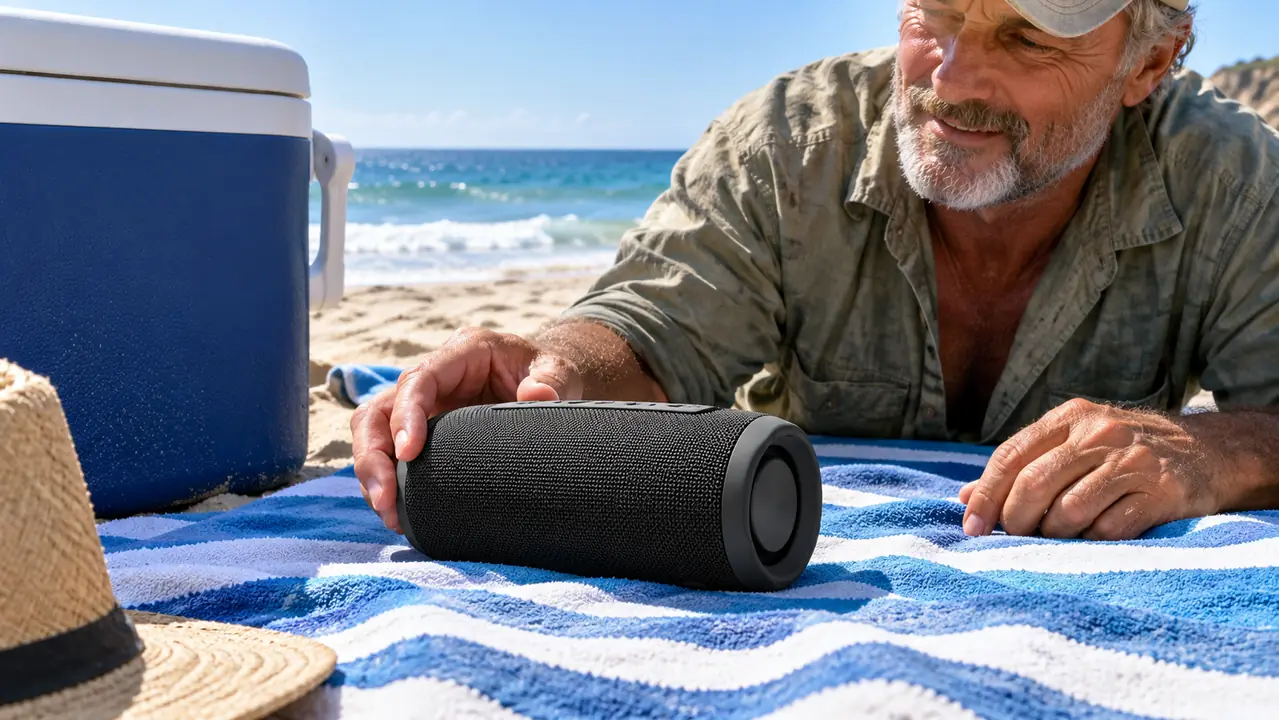
The Charge also handles wind better on the beach. On a gusty afternoon in Pismo, the Flip's sound broke up a little at high volume while the Charge held together and still reached us twenty feet away. If your trips are mostly outdoor gatherings, that matters.
One more practical point: the Charge sits flat on its base and does not roll, while the Flip can roll if laid on its side on a sloped table. Small detail, but at a campsite with uneven picnic tables I noticed it.
The Charge is also the better speaker for a group listening in a big room. In a rental house living room with family gathered, it filled the space easily, while the Flip sounded thin from across the room. For a family reunion or a holiday party, its extra power is worth the bulk.
The one thing I would warn about is weight in a backpack on a long hike. The Charge pulls noticeably on the shoulder over a few miles, while the Flip is easy to forget. That is why the Charge mostly stays in the car on our trips.
Who Should Buy Which
Buy the JBL Flip 6 if you travel like I do: one bag, everything carry-on, and music is a background pleasure rather than the main event. It is light enough to forget, tough enough to survive a drop on concrete, and sounds good enough that I never feel like I settled. It is the speaker I actually pack.
Buy the JBL Charge if your trips are longer, your phone battery is always low, or your idea of a good time is music on a beach with a group of people. The extra pound is a fair price for double the battery and a built-in charger. Just be honest with yourself about whether you will actually carry it.
Still deciding? Start with the JBL Flip 6
For most travelers, the JBL Flip 6 is the one that earns its spot in the bag. Check today's price on Amazon and see why it is my default pick.
Amazon Check Today's Price on Amazon →For my own travel, the Flip 6 is the one that goes in the bag on flights to Oahu, and the Charge rides in the back of the 4Runner on long road trips and camping weekends. If you can only buy one and you fly often, choose the Flip. If you mostly drive and like a crowd, the Charge will serve you better.
Whichever one you choose, rinse it with fresh water after a salty beach day and let it dry before charging. Both have survived sand and splashes in my testing, but that simple habit has kept the ports clean and both speakers working like new after many trips.
Either way, you are buying a tough, well made speaker from a company that clearly understands how people actually travel, and both have earned their place in our gear.