
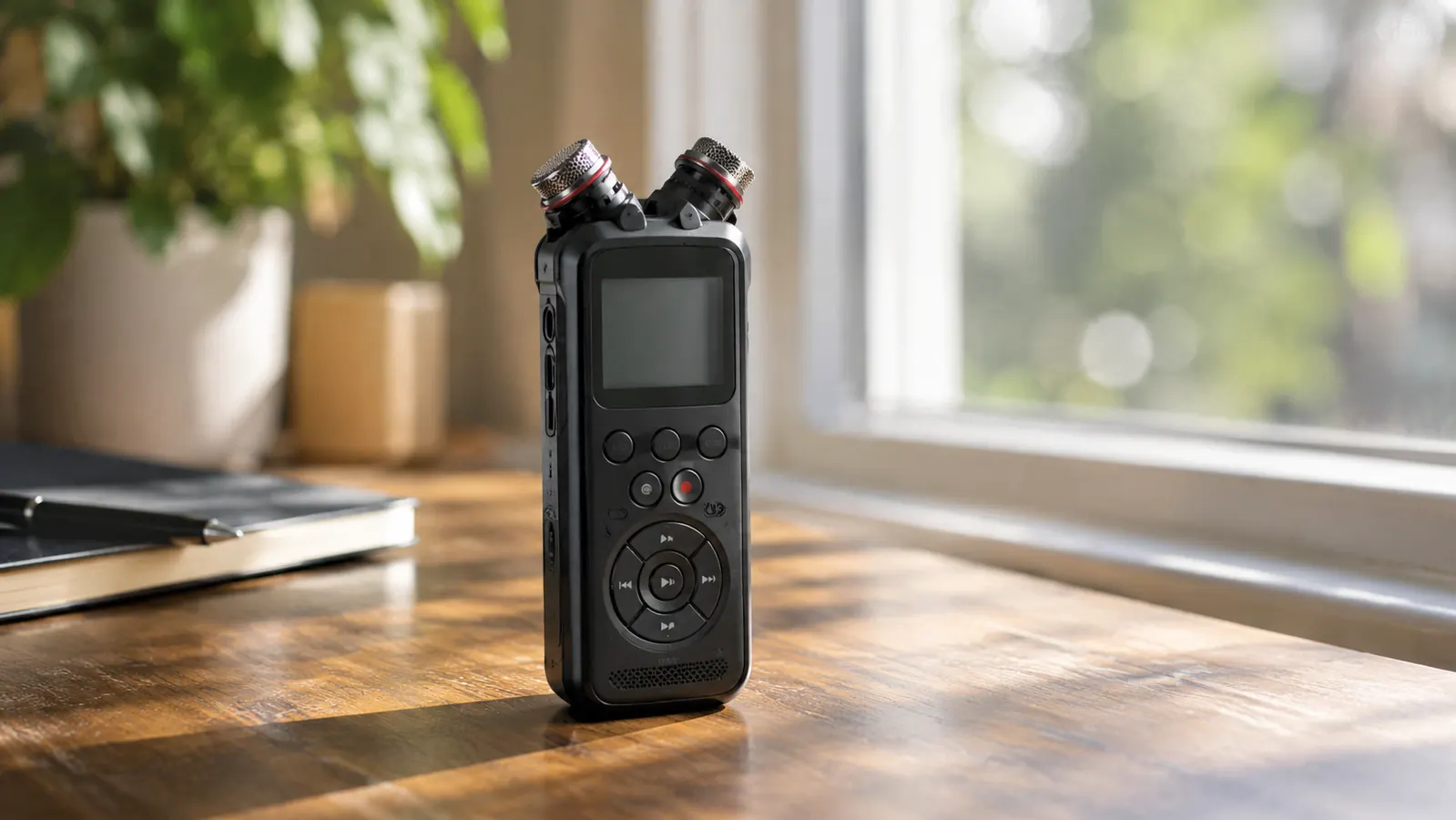
I have been recording music and soundscapes for most of my adult life, first as a live-sound tech and now as a weekend acoustic player who travels more than he stays put. When I retired from the road, I told myself I was done hauling gear. Then I flew to Oahu to see family, sat on the beach with my ukulele, and realized my phone was the only recorder I had with me. The Zoom H1essential changed that within a week of owning it.
This is not a lab test. This is a year of using the Zoom H1essential in real airports, rental cars, hotel rooms, and beach campsites, and deciding whether it earns its spot in my one carry-on backpack.
The Quick Verdict
The Zoom H1essential is the best small recorder I have carried in 30 years of audio work. It fits in a jacket pocket, records clean stereo audio for hours, and survives the kind of abuse a travel bag dishes out. The menu system takes patience, and the battery door feels flimsy, but for the price it is hard to beat.
Amazon Check Today's Price →A pocket-sized recorder that actually sounds like a real recording
If you are tired of phone recordings that sound like you were standing in a tin can, the Zoom H1essential is the fix. It is small enough to forget you are carrying it and good enough that you will actually enjoy listening back.
Amazon Check Today's Price on Amazon →How I've Used It
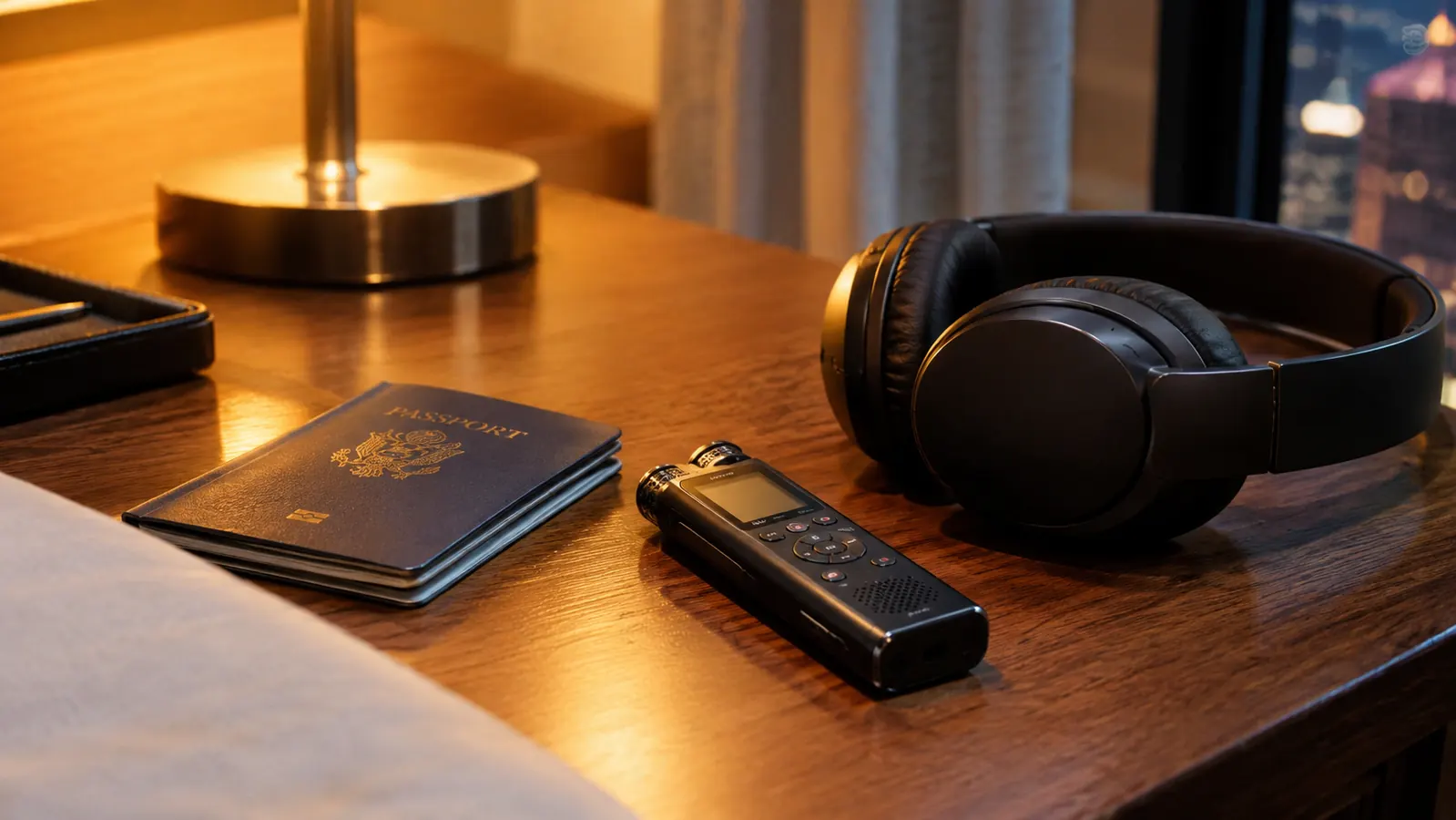
I bought the Zoom H1essential in March, right before a trip to see my wife Lani's family on Oahu. My rule for travel gear is simple: if it does not fit in my one carry-on backpack, it does not come. The H1essential is about the size of a smartphone but thicker, and it slipped into the front pocket of my backpack next to my passport. That first trip, I recorded the flight announcement, the rental car pickup, a family dinner, and three afternoons of waves and ukulele.
Since then I have used it on every trip. I have recorded my acoustic guitar in a hotel room in Santa Cruz, Lani's family singing in a kitchen in Honolulu, the sound of rain on a rental car roof, and the ocean at a beach campsite near Big Sur. I have also used it for the practical stuff: voice memos about gear, interview notes for a friend's podcast, and the occasional reminder to myself about where I parked.
The recorder has been dropped twice, once onto a hotel room floor and once onto gravel in a parking lot. It still works perfectly. The plastic body has a few scuffs, but the microphones and the screen are fine. That matters to me more than any spec sheet.
The Zoom H1essential has been my travel recorder for most of a year. It has captured ukulele songs on the lanai in Oahu, a backyard jam with friends in San Luis Obispo, birds at a campsite near Big Sur, and the sound of rain on the roof of a rental cottage. It lives in a small zippered pouch inside my carry-on backpack, and it comes out on almost every trip.
I bought it for one reason: I wanted to capture music and moments without hauling the bulky gear I used back in my live sound days. After this much use I can say clearly where it delivers and where it asks for patience.
What the Zoom H1essential Gets Right
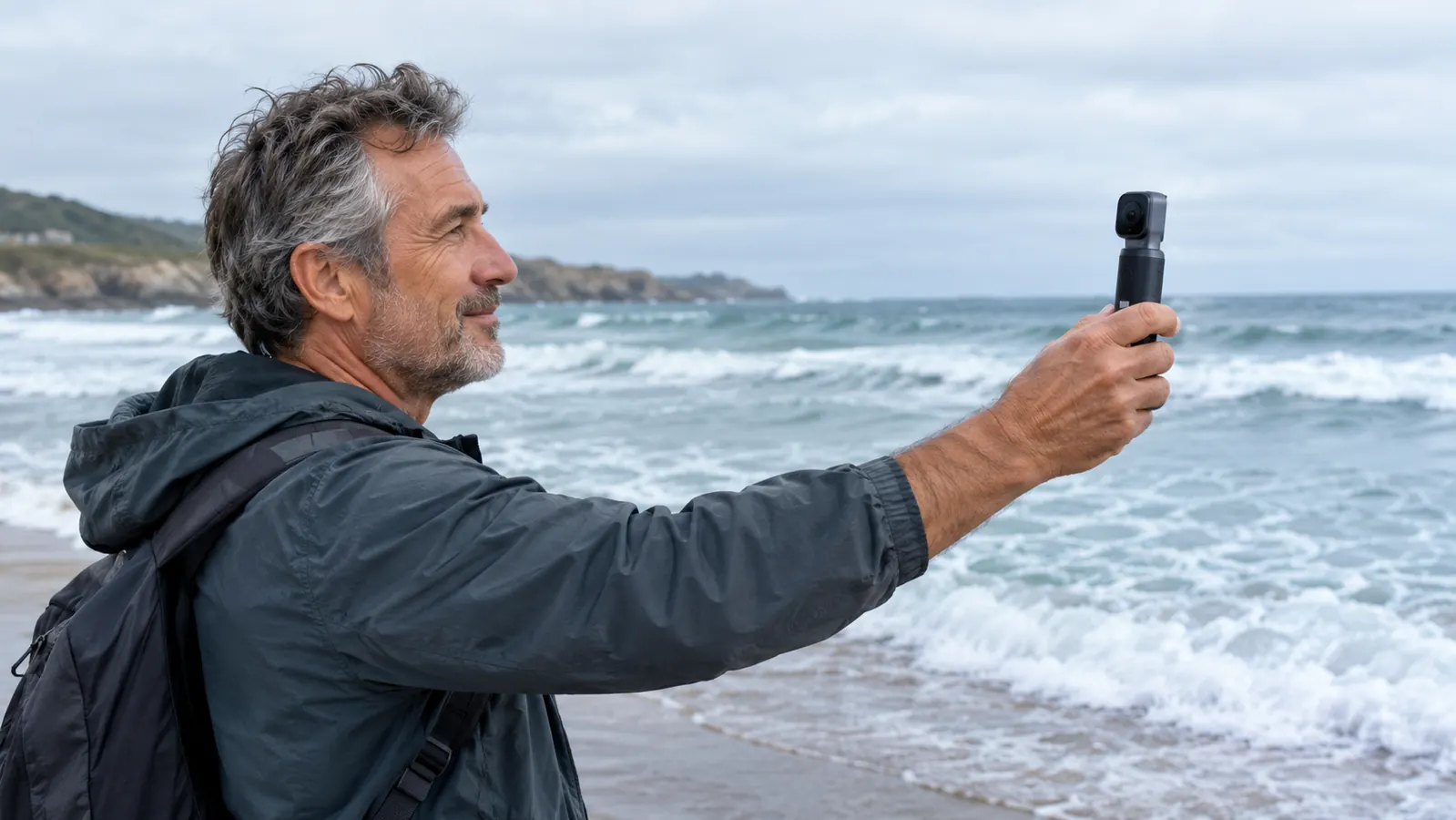
The first thing you notice is the sound. The H1essential records in 32-bit float, which sounds like marketing jargon until you actually use it. In plain terms, it means you do not have to set recording levels perfectly before you hit record. I have recorded a quiet conversation and a crashing wave in the same take, and both came out usable. With my old recorders, I would have had to pick one or the other, or spend the whole take riding the gain.
The microphones are arranged in a 90-degree X/Y pattern, which gives you a natural stereo image. When I play back a recording of my ukulele on a beach, I can hear the space around the instrument. The waves are on the right, the wind is on the left, and the ukulele sits in the middle. That sense of place is what makes a recording feel like a memory instead of a file.
Battery life is the other big win. Zoom rates it at about 10 hours on two AA batteries, and in my experience that is close to accurate. I have gone a full weekend of recording without changing batteries. I keep a spare pair in my backpack, but I have only needed them once. For a travel recorder, that is the difference between using it and leaving it in the bag.
The 32-bit float recording is the feature I would not give up. In plain terms, it means the recorder captures quiet and loud sounds without you setting a level first, so a soft fingerpicked intro and a loud group chorus both come through clean. I have never had a ruined recording because someone laughed too loud or a strum hit harder than expected.
It is also simple in the way that counts. Press one button and it records. The X/Y microphones give a natural stereo picture, the files land on a microSD card, and when I get home I plug in a USB-C cable and drag them onto the computer. For a traveler who just wants to capture the moment, that simplicity is the whole point.
Where the Zoom H1essential Gets Annoying
The menu system is the weakest part of this recorder. The screen is small, the buttons are tiny, and navigating the settings takes more button presses than it should. I am a retired live-sound tech. I have operated mixers with 40 channels and a hundred buttons. The H1essential menu still confused me for the first two weeks. Once you set it up the way you like, you rarely need to go back in, but the learning curve is real.
The battery door is my other complaint. It is a small plastic latch that does not feel as solid as the rest of the recorder. I have not broken it, but I am careful with it, and I do not think it would survive a serious drop. For a recorder that otherwise feels built to take abuse, that one part feels like an afterthought.
The built-in speaker is also not great. It is fine for checking that you captured something, but it is not for listening. I always use headphones when I review a take, which is standard practice anyway, but it is worth knowing before you buy.
I recorded a quiet conversation and a crashing wave in the same take, and both came out usable. With my old recorders, I would have had to pick one or the other.
Wind noise is the annoyance I fight most outdoors. On a breezy beach, even a light wind across the microphones makes a rumble that ruins a quiet recording. The included foam helps a little; a furry windscreen helps a lot, and I now keep one in the pouch permanently.
The small screen and buttons take getting used to. Changing settings means short presses through little menus, and I found myself squinting at it in bright sun. The good news is that once the settings are right, you rarely touch them again.
How It Holds Up Over Time
After a year of regular use, the Zoom H1essential still records exactly as well as it did on day one. The microphones have not degraded, the buttons still click cleanly, and the screen has no dead pixels. The body has a few scuffs from the drops, but nothing that affects function.
The 32-bit float recording has been the biggest long-term benefit. Because I do not have to worry about clipping, I have recorded things I would have skipped with my old gear. I recorded a family dinner where people were talking over each other, laughing, and clinking glasses, and the recording captured all of it without distortion. That is the kind of memory you cannot recreate, and the H1essential caught it perfectly.
I have also used it for more serious work. A friend of mine is recording a podcast, and I have done a few remote interviews with him using the H1essential as a backup recorder. The audio quality is good enough for broadcast, which is not something I can say about most recorders in this size class.
After a year in and out of a backpack, the body shows a few scuffs but nothing has loosened or failed. The buttons still click cleanly and the microphones sound exactly as they did on day one. The battery door is still the weak point, so I keep a habit of checking it before every trip.
Two AAA batteries last many hours of recording, and because they are sold in every airport shop and gas station, I have never been stuck. I carry a spare set in the pouch and swap them when the indicator drops. That beats hunting for a charger in a hotel room any day.
The one change I made after a few months was buying a larger, faster microSD card. Long recordings at the highest quality settings fill a small card quicker than you expect, and a bigger card means I never have to delete anything on the road.
Over the year I also learned its limits for interviews. With the built-in microphones it captures a conversation across a table fine, but voices sound distant if people sit far apart. A small lapel microphone plugged into the 3.5mm input fixed that for the one family interview I recorded with an older relative of Lani's in Honolulu.
The tripod thread on the bottom has been more useful than I expected. A small tabletop tripod lifts the recorder off the table, away from bumps and vibration, and points the microphones at the music. That single accessory made my recordings noticeably cleaner, and it cost almost nothing in bag space.
Who This Is For
The Zoom H1essential is for anyone who wants to record something real and does not want to carry a bag of gear to do it. It is for the musician who wants to capture song ideas on the road, the traveler who wants to record the sound of a place, the podcaster who needs a reliable backup, and the person who just wants better audio than their phone can give them.
If you are that person, the H1essential will probably be the most-used piece of gear you own. It is small enough to always have with you, simple enough to use without thinking, and good enough that you will not feel like you are compromising.
Looking back over a year, the recordings I treasure most are the simple ones: Lani laughing at the end of a song, rain on the cottage roof, a friend singing harmony on a porch in San Luis Obispo. The Zoom H1essential made those easy to catch, and that is exactly what I wanted from it.
If you buy one, budget for a furry windscreen, a small tripod and a decent microSD card. Those three accessories turn a good recorder into a great travel kit, and together they still fit in one small pouch.
Who Should Skip It
If you need to record a band live with multiple microphones, or if you need to plug in professional XLR microphones, the H1essential is not the recorder for you. It has a single 3.5mm mic input, not XLR, and it is designed for capturing a scene, not mixing a session. For that work, you want something like the Zoom H4essential, which has XLR inputs and more routing options.
You should also skip it if you are not willing to learn the menu system. The H1essential rewards patience, but it does not reward people who want to plug in and go without reading the manual. If that sounds like you, a simpler recorder might be a better fit.
What I Liked
- 32-bit float recording means you never have to worry about clipping or setting levels perfectly
- Excellent stereo microphones capture a real sense of space and place
- About 10 hours of battery life on two AA batteries, which is outstanding for a recorder this size
- Small and light enough to live in a jacket pocket or the front pocket of a carry-on
- Built like a tank, with the exception of the battery door
- Good enough audio quality for podcast backup and broadcast work
Where It Falls Short
- Menu system is fiddly and takes time to learn
- Battery door feels flimsy compared to the rest of the build
- Built-in speaker is only useful for quick checks, not real listening
- No XLR inputs, so it is not for serious multi-mic recording
The recorder I reach for every time I pack my bag
After a year of travel, the Zoom H1essential is the one piece of gear I never leave behind. If you want recordings that sound like real places and real moments, this is the recorder to get.
Amazon Check Today's Price on Amazon →